
FIRST Robotics Competition (FRC)
The closest thing to real-world engineering a student can get
FIRST Robotics Competition
For students in grades 9-12
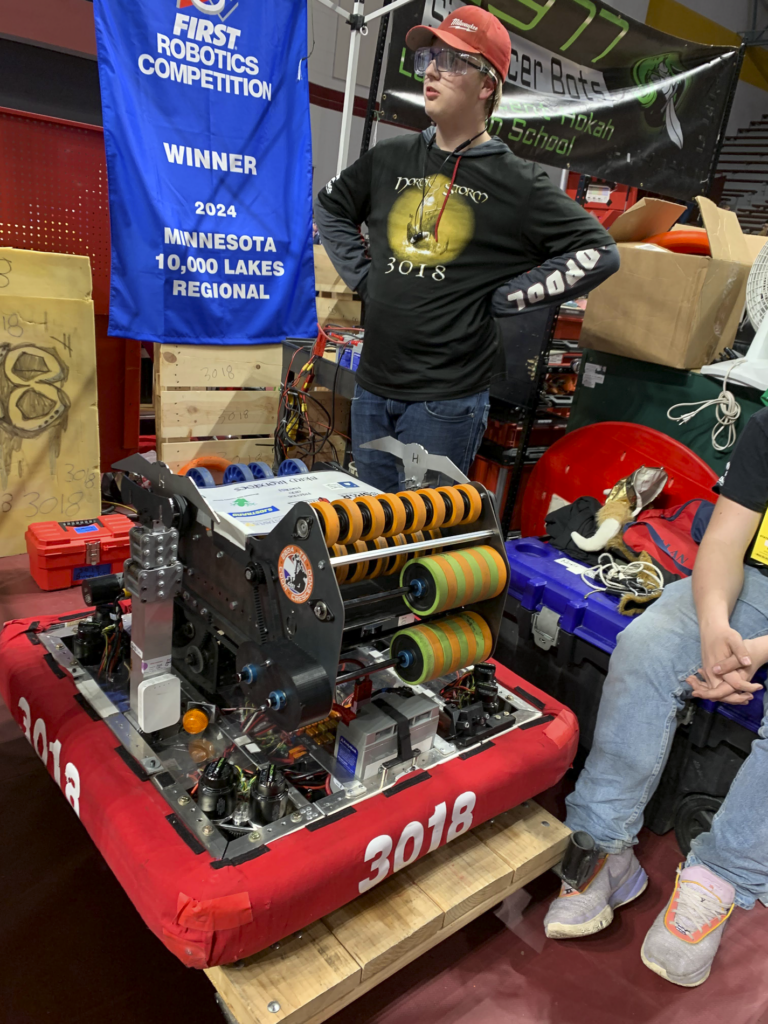
The varsity Sport for the Mind™”, FRC (FIRST® Robotics Competition) combines the excitement of sport with the rigors of science and technology. Under strict rules, limited resources, and time limits, teams are challenged to raise funds, design a team “brand,” hone teamwork skills, and build and program robots to perform prescribed tasks against a field of competitors. It’s as close to “real-world engineering” as a student can get.
- Build and compete with a robot of their own design
- Learn and use sophisticated software and hardware
- Compete and cooperate in alliances and tournaments
- Learn from professional engineers, programmers, and precision machining/fabrication specialist
- Qualify for over $20 million in college scholarships
FRC Details
Ages: FRC is designed for students in grades 7-12
Cost: FRC participation fee is $250, with a discount of $50 for participants who register before November 1.
Saint Peter Area Robotics is a non-profit community group that is run by volunteers. We need help from the families of our students, so a volunteer commitment deposit is mandatory and is included with your registration fee. You will be REFUNDED THE AMOUNT once you’ve completed your volunteer hours. If registering for FRC, a $100 volunteer deposit is charged. This equates to 4 hours of volunteering.
Season
January – April
Registration
FRC participants are welcome to join the team at any time before or during the FRC build season
Practices
FRC teams typically meet 2 times a week during the fall to work on fundraising and skill development for building, design, and programming skills. Practices increase to 2-6 nights a week during the 6 week build season in January and February. During the build season the number of meetings will depend on the role the student has on the team and their availability.
Team Sizes
Typically 8+ students
Parent Involvement
Teams are led by mentors who include parents and community members with typically who provide guidance as professional engineers, programmers, and precision machining/fabrication specialists.
Parents are strongly encouraged to be active with the team to help with travel to tournaments, help students with community outreach such as doing demonstrations at schools and the County Fair, and help students with fundraising activities which include events and contacting businesses for sponsorship.
Challenge
Based around a themed challenge that will change each year where teams compete head to head, using a sports model with strict rules, including resource and time limits. The challenge each year is released in early January and teams then have 6 weeks to build their robot until they have to bag it up and not touch it until their tournament.
Competition
The team will compete in one or two Regional Qualifying tournaments in March and April. The team may advance to further competitions based on performance.